Facts About Petra That Will Surprise You
The short answer. Eighty percent of Petra has never been excavated, on the authority's own published line. The ticket price for the same day at the same gate can be 50 JD or 90 JD depending on nothing to do with the park itself. Petra by Night runs five nights a week, not the three most of the web still repeats. And the city was a capital trading in frankincense and myrrh a century before Rome ever reached it. Nine facts below, each one traceable to the authority that publishes it.
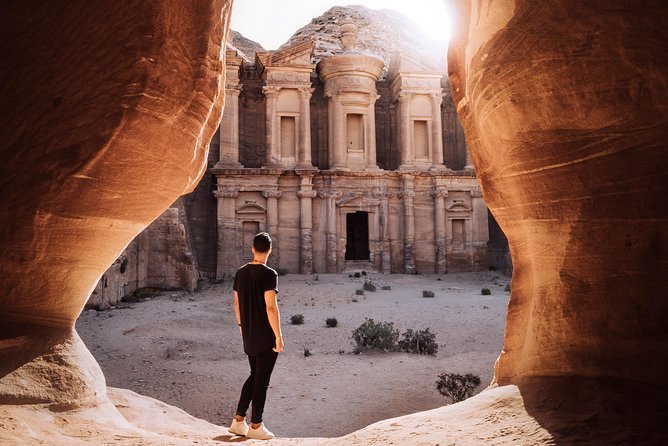
Petra photographs as one building, because the Treasury is the image everyone already knows. The facts that actually surprise first-time visitors sit behind that image rather than in it. They live in the fee table, in the history, and in what has never been dug up. If any of these changes how you plan the day, petra tours from amman sets out what each shape of trip actually gives you.
1. Most of the city has never been excavated
The Petra Development and Tourism Region Authority states plainly on its own pages that roughly 80% of the site is yet to be discovered. Everything on a day-trip itinerary — the Treasury, the Street of Facades, the Royal Tombs — is drawn from the smaller, excavated share. The city's own history covers what has been found and when.
2. The ticket price depends on your bed, not your visit
A one-day ticket is 50 JD if you are spending at least one night in Jordan, and 90 JD if you are not. Nothing about the day inside the gate changes; only where you sleep does. It is the single largest swing in the cost of a Petra day, and no tour listing explains it on its own booking page. The full breakdown has the arithmetic on the Jordan Pass as well.
💡 Did you know? A two-day tour that puts you in a Wadi Rum camp overnight can cost less at the Petra gate than a one-day trip does. The 40 JD gap between the two ticket prices covers a meaningful share of the difference.
3. Petra was a capital before Rome ever ruled it
The Nabataeans built their wealth on the frankincense, myrrh and spice trade routes that crossed here between Arabia, Egypt and Syria-Phoenicia. Petra prospered as their capital from the 1st century BC. Rome did not annex it until AD 106, under the emperor Trajan, who folded it into the empire as the Provincia Arabia.
4. An earthquake did more damage than time did
In AD 363 a major earthquake struck the region and destroyed much of the built city. What survives so completely today is largely what was carved into the rock rather than built freely on top of it. A facade cut into sandstone does not collapse the way a wall does.
5. It was lost to the West for centuries
The Swiss explorer Johann Ludwig Burckhardt reached Petra in 1812. He travelled disguised as a Muslim scholar, to gain access to a site local Bedouin communities had of course never lost track of. UNESCO inscribed it on the World Heritage List in 1985, under three separate criteria.
6. Petra by Night runs more often than most sites say
Search results and older guides still repeat a three-night-a-week schedule. The authority's own page states five nights, Sunday to Thursday, 8:30pm to about 10:30pm, at 30 JD, and you need a daytime ticket or a Jordan Pass first. What the show is, and is not, covers what a Jordan Pass does and does not include.
7. The Siq is barely wide enough for two camels
The walk in is a natural cleft in the sandstone, formed by the rock splitting apart. It is just over a kilometre long, and narrow enough in places that the walls nearly meet overhead. It once carried the city's water supply, through channels still visible along its base. It is also the site's one real weather risk: heavy rain upstream can close it for flash-flood safety.
The Siq can close without notice in wet weather. Book a fare that refunds if your trip falls in the rainy months, and check the season-by-season page before you fix a date.
8. There are seven officially graded trails, and four need a guide
Beyond the main corridor, the Jordan Tourism Board publishes seven named trails with their own difficulty ratings. They range from an easy main route to routes graded hard that may only be walked with a licensed guide. Every trail, with its grading and its hours, is worth reading before you assume the whole site is a flat, one-hour walk.
9. Wadi Musa sits almost a kilometre above sea level
The gateway town's elevation of around 1,000 metres is why Petra does not run to the desert extremes of Jordan's lowlands. Spring days sit in the low-to-mid twenties Celsius. Even summer afternoons above 35 °C cool off faster after dark than they would at sea level.
| Year | What happened |
|---|---|
| 1st century BC | Petra prospers as the Nabataean capital |
| AD 106 | Trajan annexes the kingdom as Provincia Arabia |
| AD 363 | A major earthquake destroys much of the built city |
| 1812 | Johann Ludwig Burckhardt reaches the site |
| 1985 | UNESCO inscribes Petra as a World Heritage Site |
| 2025 | Petra by Night relaunches with projection mapping |
What do you do with all of this?
- Budget the gate as its own line item, not a rounding error inside your tour fare.
- Do not expect to see "most of Petra" in one visit — nobody has, yet.
- If a night in Jordan is already in your plans, your ticket is 50 JD; check the pass math before you assume it is not worth buying.
- Treat wet-season dates with a flexible booking, because the Siq is the one part of the site weather can close.
10. The Jordan Pass hides its own visa saving
The Jordan Wanderer pass costs 70 JD. It waives your tourist entry visa on two published conditions: buy it before you arrive, and stay at least two nights. It covers your Petra ticket at the same time. No official page publishes the visa fee on its own, only that the pass includes it, so the saving is real even though this site does not print a number for it. The pass also opens more than forty other sites, several of them on the same road you are already driving: Wadi Rum at 5 JD, Jerash at 10 JD, Mount Nebo at 3 JD, Madaba at 3 JD, Shobak Castle at 1 JD and Dana at 10 JD. Each is charged separately if you are paying gate by gate instead.
For what each of these facts means for your own itinerary, the two roads south from Amman and the monuments themselves, in walking order turn the history into a plan.
None of this needs you to pick between two ticket prices by guesswork. The trips below cover the straightforward day and the overnight version that changes the gate price; the rest sit on Petra Amman Tours.
Tours built around these facts
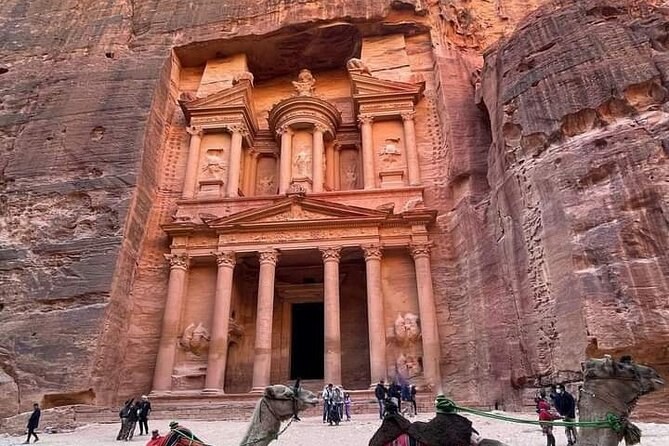
From Amman :Private or Group Full day tour to Petra
The straightforward one-day answer, with the ticket as a tickable grade.
From $90 per person
Check Availability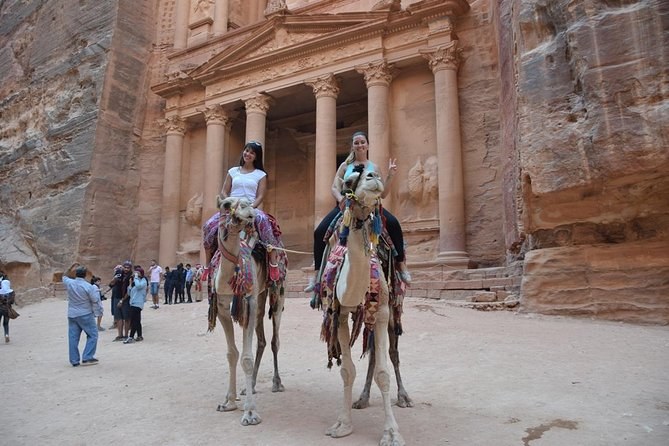
2-Day Tour: Petra, Wadi Rum, and Dead Sea from Amman
The night that moves your ticket from 90 JD to 50 JD.
From $249 per person
Check Availability