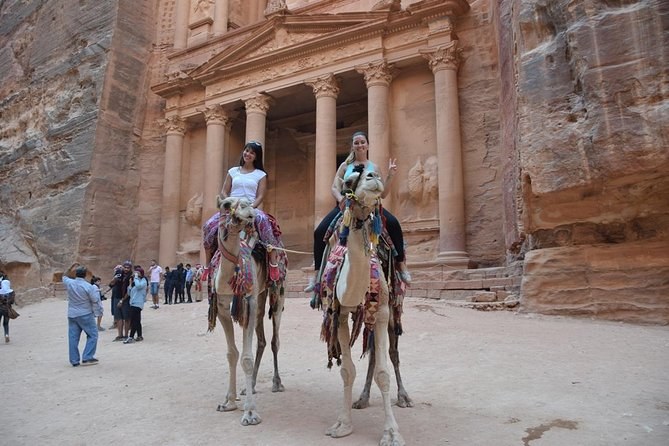
2-Day Tour: Petra, Wadi Rum, and Dead Sea from Amman
The night that moves your ticket from 90 JD to 50 JD.
From $249 per person
Check AvailabilityWadi Musa sits around 1,000 metres above sea level, and that altitude is the single fact behind everything below: it softens the desert heat in summer and turns genuinely cold at night in winter. Layer that against the gate's own hours, which move twice a year by season rather than by forecast, and you have what actually changes your day. This is petra jordan tours from amman.
Four climate seasons, on the Jordan Tourism Board's own account: spring (March–May) in the low-to-mid-20s Celsius, summer (June–August) with afternoons frequently above 35 °C, mild autumn (September–November, though September still carries summer warmth), and winter (December–February), crisp and sunny between cold snaps, rain and occasional snow. Wadi Musa's altitude of around 1,000 metres is why none of these run to true desert extremes in either direction.
The gate itself runs a separate, two-part calendar. Summer hours are 06:00–18:00, from 2 March to 1 October; winter hours are 06:30–17:00, from 2 October to 1 March. No last-admission time is published in either season, so you plan around the closing time itself and how long the walk back to the Visitor Centre takes you.
No official source publishes a monthly temperature or rainfall figure for Wadi Musa — only the seasonal bands above, which are the authority's own. Heavy rain can close the Siq briefly for flash-flood safety, so check the drive itself against the forecast on a wet-season date rather than assuming the walk is open.
Every entry below carries its climate-season band, its gate-hours band, and the crowd or flood fact that applies to that month specifically — not a number of its own, because none is published.
Winter here is crisp and sunny between cold snaps, with rain and occasional snow, and Wadi Musa's altitude of around 1,000 metres makes the mornings genuinely cold. Gate hours run 06:30–17:00, and January sits inside the quietest quarter of the year, December to February. Layer up for the first hour and you get the emptiest Siq of the year.
Still inside the winter band — crisp days broken by cold snaps, with rain or the odd snowfall at this elevation. Gate hours hold at 06:30–17:00, and the quiet December-to-February season continues. Five weeks from the 2 March changeover, this is your last month of both the winter quiet and the shorter day.
Spring's low-to-mid-20s Celsius take over from winter's cold, and the busiest quarter of the year, March to May, opens with it. Winter hours (06:30–17:00) run until 1 March; summer hours (06:00–18:00) begin on the 2nd, adding ninety minutes of daylight overnight. Check which side of the 2nd your date falls on, and book ahead — the crowds return with the warmth.
Full spring, with afternoons in the low-to-mid-20s Celsius and the gate on summer hours, 06:00–18:00. April sits inside the year's busiest quarter, March to May. Use the first two hours after the 06:00 opening for the best light and the thinnest crowds of the day.
Spring's low-to-mid-20s Celsius hold through May, the last month of the year's busiest quarter before summer heat thins the crowds. Gate hours stay at 06:00–18:00. Start within the first two hours after opening — it is your last easy warm month before real heat arrives.
Summer heat arrives: afternoons frequently top 35 °C, well above spring's low-to-mid-20s. Gate hours are the long 06:00–18:00 window, and June sits outside both the busiest and the quietest quarters — a genuine shoulder month. Front-load your visit into the first two hours after opening, before the heat builds.
Peak summer, with afternoons frequently above 35 °C even at Wadi Musa's elevation of around 1,000 metres, which is the only reason it is not hotter still. Gate hours remain 06:00–18:00. Treat the first two hours after opening as the working part of your day, and save the rest for shade.
Summer heat holds above 35 °C in the afternoons, and the long 06:00–18:00 window has five weeks left before the 1 October cut-off. August, like June and July, falls outside both the busiest and quietest quarters. The same rule applies: start in the first two hours after opening.
Autumn technically starts here, but September itself still carries summer warmth into the afternoons, on the authority's own account. Gate hours stay at 06:00–18:00 until 1 October, and September reopens the year's second busiest quarter, September to November. Expect a warm afternoon and a returning crowd, whichever season the calendar says it is.
Autumn's mild temperatures continue, and October is still inside the busiest quarter, September to November. Summer hours (06:00–18:00) run through 1 October; winter hours (06:30–17:00) begin on the 2nd, trimming ninety minutes off the day. Check which side of the 2nd your date falls on, the same question March asks in reverse.
Mild autumn temperatures close out the year's second busiest quarter, September to November, before December's quiet arrives. Gate hours have already switched to 06:30–17:00. It is the last mild, crowded month before winter's cold and quiet take over.
Winter returns: crisp, sunny days broken by cold snaps, rain and occasional snow, and heavy rain can close the Siq briefly for flash-flood safety. Gate hours are 06:30–17:00, and December opens the quietest quarter of the year. Check the forecast before an early start — rain is the one thing that can stop the walk here.
| Season | Temperature band | Gate hours | Crowd level | What it means for you |
|---|---|---|---|---|
| Spring (Mar–May) | Low-to-mid-20s °C | 06:30–17:00 to 1 Mar, then 06:00–18:00 | Busiest quarter | Book ahead; mornings are the coolest and quietest part of the day |
| Summer (Jun–Aug) | Afternoons frequently 35 °C+ | 06:00–18:00 | Outside busiest/quietest | Front-load your day into the first two hours after opening |
| Autumn (Sep–Nov) | Mild; September still warm | 06:00–18:00 to 1 Oct, then 06:30–17:00 | Busiest quarter | Expect crowds and a warm September afternoon |
| Winter (Dec–Feb) | Crisp, cold snaps, occasional snow | 06:30–17:00 | Quietest quarter | Dress for real cold, and check the forecast for the Siq |
The first two hours after the 06:00 opening, on the Jordan Tourism Board's own account: the best light, the coolest air, and the quietest walk of the day. The same source names the first and last two hours of any day as the quietest, whatever the month.
Every one-day tour here leaves Amman before or at dawn for the same reason: the Desert Highway drive already takes three hours, and starting at first light is what makes four to seven hours at the site possible inside a 10–12 hour round trip. Petra by Night, the one after-dark option, runs a fixed evening schedule of its own; see when the show runs rather than treating it as a way around the daytime hours.
The seasonal temperature bands, the elevation figure and the crowd pattern are the Jordan Tourism Board's own published guide; the gate hours and their two changeover dates are the site's own schedule.
The night that moves your ticket from 90 JD to 50 JD.
From $249 per person
Check Availability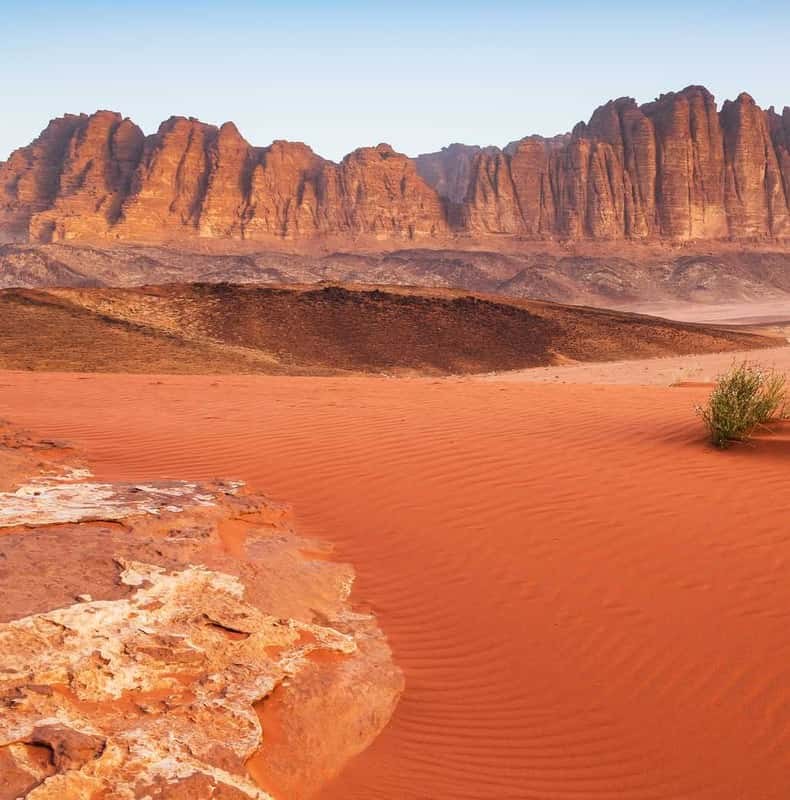
Camp, dinner, jeep and the Dead Sea on the tightest two-day fare.
From $205 per person
Check Availability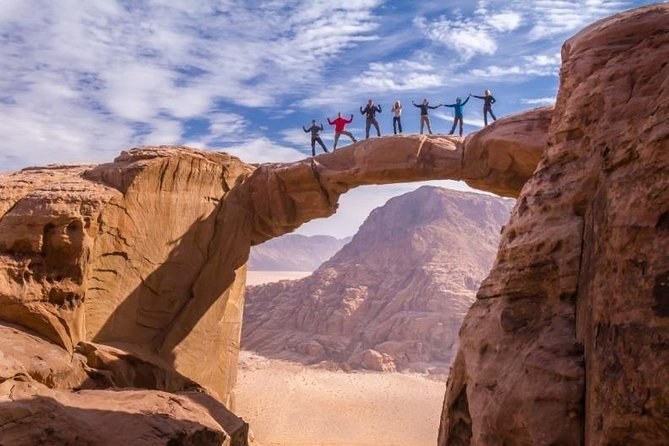
Step-free, four languages, and three hours in the desert.
From $84 per person
Check AvailabilityHow the road itself adds hours to the day is on getting there, and what the ticket costs at each season is on visiting Petra. Every guided day is on Petra Amman Tours.