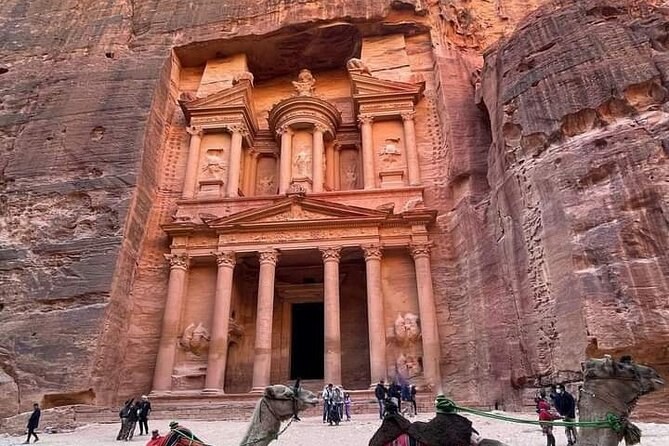
From Amman :Private or Group Full day tour to Petra
The straightforward one-day answer, with the ticket as a tickable grade.
From $90 per person
Check Availability
The short version. The park runs a summer clock from 2 March to 1 October (06:00–18:00) and a winter clock the rest of the year (06:30–17:00). A day trip from Amman gets more daylight to work with in summer and a cooler walk in winter. Spring and autumn split the difference: low-to-mid twenties in March to May, mild with lingering summer warmth into September. Heavy rain can close the Siq briefly for flash-flood safety, which is a winter risk rather than a summer one.
In this guide
"When should I go" has a specific answer here, because the park's own clock moves twice a year and the drive south is fixed at about three hours regardless of season. Below is what each season actually does to a day trip from Amman, using the authority's own seasonal bands rather than a month-by-month temperature chart nobody official publishes. Petra Amman booking runs on every one of these months.
Three things change with the season. How much daylight you have either side of the drive is one. How hot the walk back out of the Siq feels in the afternoon is another. The third is how the ticket office and Little Petra manage their own shorter winter hours. The site itself does not close for any month; the clock just moves.
| Season | Site hours | What it means for a day trip |
|---|---|---|
| 2 Mar – 1 Oct | 06:00 – 18:00 | The longest daylight window; a three-hour drive still leaves a full day inside |
| 2 Oct – 1 Mar | 06:30 – 17:00 | An hour less daylight overall, so the return drive starts earlier |
Wadi Musa, the town at the gate, sits around 1,000 metres above sea level. That elevation is what keeps the site noticeably cooler than Jordan's low desert, even on a day trip that also touches genuinely hot ground further south or east. It is one reason the walk here feels manageable in months that would be uncomfortable at sea level nearby.
It does not cancel the season out. Afternoons still run above 35 °C in summer, and winter still brings cold snaps and the occasional snowfall. The elevation shifts the whole year a little milder; it does not flatten it.
Low-to-mid twenties Celsius through March, April and May, which is close to the most comfortable walking weather this itinerary sees all year. It is also one of the two busiest periods on the calendar, alongside autumn, so an early departure from Amman matters more for beating the crowd than for beating the heat.
Afternoons frequently run above 35 °C from June to August, on a walk with very little shade past the Treasury. A day trip that starts at 06:00 gives you the coolest hours of the day at the start rather than the end, which matters more here than almost anywhere else on this itinerary. Take more water than you think you need, and treat the shade of the Siq itself as the last cool ground before the open trail.
September still carries real summer warmth into the afternoons, easing through October and November into a milder, more comfortable stretch. Along with spring, this is one of the two busiest windows of the year, so the crowd thins later in the season even as the temperature does too.
Yes, for a specific kind of visitor. December to February brings crisp, sunny days, occasional cold snaps, rain, and even the occasional snowfall — genuinely unusual for a desert site. It is part of why the park closes on the later winter clock, and it is also the quietest season of the year.
Heavy rain is a real risk, not a rare one. The Siq can close briefly for flash-flood safety in wet weather, which is a winter-season risk specifically. It costs you nothing to plan around: almost every one of the Petra tours from Amman refunds in full up to 24 hours ahead, so book one of those and check conditions the morning you travel.
Two windows, and they stack. Winter is the quietest season on the calendar, and the first two and last two hours of any single day are the quietest hours, whatever the month. Travel in December or January and arrive at opening, and you get both at once.
That combination matters more here than at a site with one obvious entrance and exit, because the Siq itself is the bottleneck everybody shares. A quiet Siq is a genuinely different walk from a crowded one, and the two-window rule is the simplest way to find it.
The first two hours after the 06:00 opening, in every season the park runs on its summer clock. That window gives you the Siq and the Treasury before the crowds build and before the sun climbs high enough to flatten the canyon's own shadows. Plan your departure from Amman around this window specifically, rather than around your own preferred wake-up time.
None of the four shapes this site covers — one day, one day with Wadi Rum, two days or three — is ruled out by any season. What changes is how you use the hours you have, not whether the trip runs at all.
About an hour and a half. The summer clock runs 06:00 to 18:00, a twelve-hour window. The winter clock runs 06:30 to 17:00, ten and a half hours. That difference lands entirely at the edges of the day, since the site opens later and closes earlier at once.
For a day trip that already spends about six hours on the road, that missing ninety minutes is worth planning around rather than discovering at the gate. A winter departure that leaves Amman at the same clock time as a summer one reaches Petra with less daylight left to use, not less time in the car.
No published rule closes either road by season. The Desert Highway and the King's Highway both run year-round, and the choice between them stays a route decision rather than a weather one: about three hours on the Desert Highway against four to four and a half on the King's Highway, whichever month you travel in.
What the season changes is how much of that drive you want to do in the dark. A winter departure timed to reach Petra by opening leaves less daylight margin either side of the drive than the same schedule would in summer, on either road.
One thing worth planning around: a two- or three-day trip that spends a night in a Wadi Rum desert camp is genuinely cold after dark from November through February, whatever the daytime temperature at Petra was that afternoon. Pack for a cold desert night even on a trip booked for its warm daytime hours.
Not for the site itself, since it opens every day of the year on one clock or the other. The closest thing to a caution is booking a winter date without a flexible fare, given the Siq's own flash-flood rule, or booking a summer afternoon departure without extra water for a walk that offers very little shade once you are past the Treasury.
Whichever month you land in, two habits carry you through it. Start as close to opening as your tour allows, and carry more water than the season seems to call for. Both cost nothing and both matter in every one of the four seasonal bands above.
Picked your month? The three below run in any of them, and two of them turn a cool evening into a night at the gate. Petra Amman Tours has the rest of the calendar's options.
The straightforward one-day answer, with the ticket as a tickable grade.
From $90 per person
Check Availability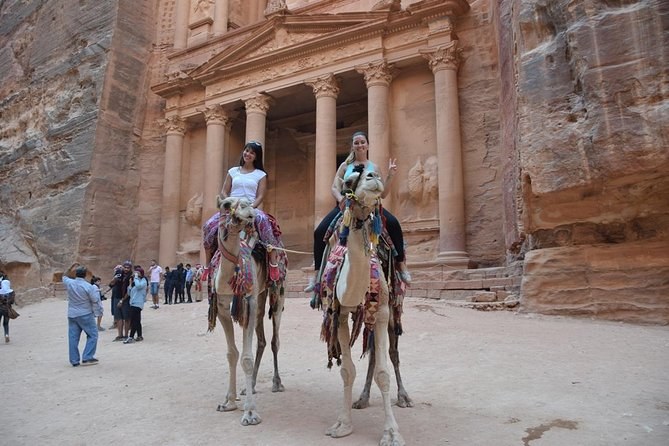
The night that moves your ticket from 90 JD to 50 JD.
From $249 per person
Check Availability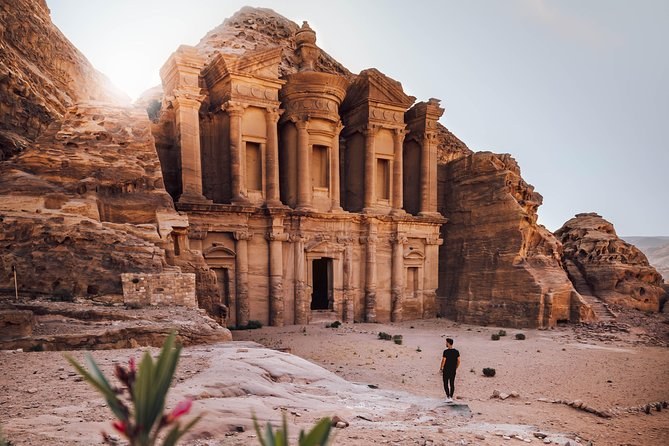
The King's Highway version: Mount Nebo, Madaba, Dana, Shobak.
From $349 per person
Check Availability